MIM Manufacturing: Ideal for Complex Metal Parts at Scale
MIM manufacturing has quietly transformed how industries produce intricate metal components, offering a solution that bridges the gap between traditional metalworking and modern production demands. If you’ve ever wondered how manufacturers create those impossibly complex metal parts found in everything from smartphones to surgical instruments, you’re about to discover a process that combines ingenuity with industrial efficiency. This technology deserves attention not just for what it produces, but for how it fundamentally changes the economics and possibilities of metal component manufacturing.
What MIM Manufacturing Really Means
Let’s start with the basics. Metal injection moulding takes fine metal powders, mixes them with a binder material, and injects this combination into moulds much like plastic injection moulding. The result? Metal parts with intricate shapes that would be extraordinarily expensive or outright impossible to create through conventional machining or casting methods.
The process unfolds in stages that each play a crucial role. First comes feedstock preparation, where metal powders are blended with polymer binders to create a mixture that flows smoothly when heated. This feedstock then gets injected into precision moulds under controlled conditions. After the part cools and solidifies in its green state, the binder is systematically removed through debinding. Finally, sintering at high temperatures fuses the metal particles together, creating a dense, fully metallic component with properties comparable to wrought metals.
Why Complexity Doesn’t Mean Compromise
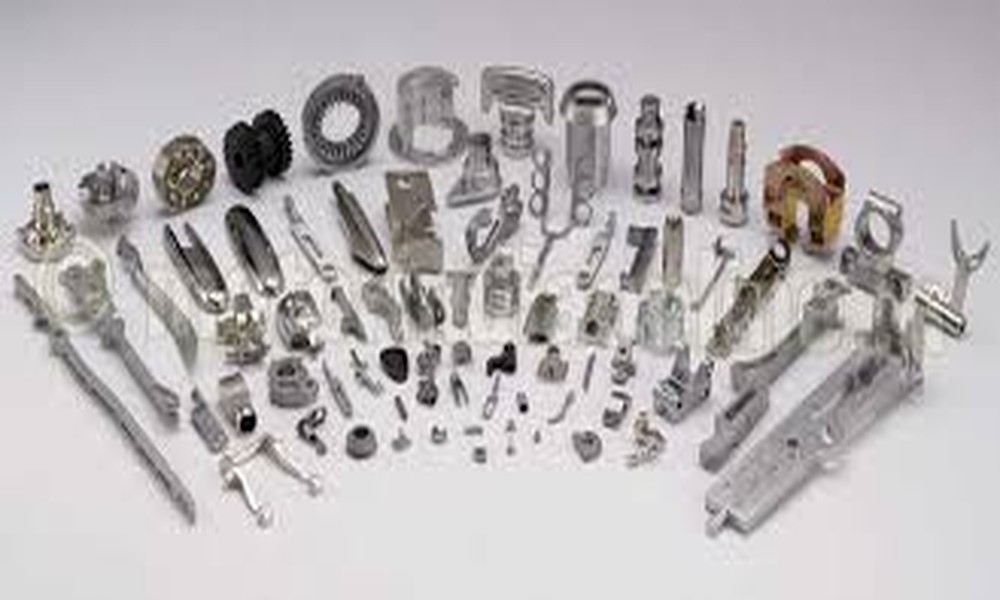
Here’s where MIM manufacturing truly shines. Traditional machining approaches complexity as a problem to solve, with each additional feature adding time and cost. MIM, conversely, treats complexity with remarkable indifference. Whether a part requires threads, undercuts, multiple levels, or intricate surface details, the manufacturing cost remains largely unchanged. The mould captures all these features simultaneously during injection.
This characteristic makes the process particularly valuable for:
- Medical and dental instruments requiring precise, ergonomic designs
- Firearms components with complex internal geometries
- Consumer electronics parts demanding miniaturisation and integration
- Automotive sensors and actuators with multiple functional features
- Aerospace components requiring high strength-to-weight ratios
Singapore’s mim manufacturing sector has capitalised on this capability, producing components that showcase the technology’s ability to deliver intricate designs with consistent quality across large production runs.
The Scale Question
Understanding when metal injection moulding makes economic sense matters enormously. The process requires investment in tooling, which can represent substantial upfront costs. This makes MIM most attractive for medium to high-volume production, typically starting around 10,000 parts annually and extending into the millions.
At these volumes, the per-part economics become compelling. Once tooling costs are amortised across sufficient quantities, mim manufacturing often undercuts alternative manufacturing methods significantly. The automated nature of production means labour costs remain low even as output scales upward. Material utilisation proves efficient, with minimal waste compared to subtractive processes that remove substantial amounts of material to achieve the final shape.
Material Versatility and Performance
The range of materials processable through MIM continues to expand, offering designers considerable flexibility in matching material properties to application requirements. Stainless steels dominate current production, valued for their corrosion resistance and mechanical properties. Low-alloy steels provide cost-effective solutions where corrosion resistance is less critical. Tool steels deliver exceptional hardness for wear-resistant applications.
Beyond steels, the technology accommodates titanium alloys for biomedical applications, tungsten alloys for high-density components, and various specialty alloys engineered for specific performance characteristics. This material versatility means engineers can optimise not just geometry but material composition for each application.
Precision and Consistency
Achieving tight tolerances represents a critical capability for many applications, and metal injection moulding delivers impressive precision. Parts emerge from sintering with tolerances typically within plus or minus 0.3 to 0.5 per cent of nominal dimensions. For applications requiring even tighter control, secondary operations like sizing or machining specific features can achieve micron-level precision.
The consistency across production runs rivals or exceeds what traditional processes deliver. Once process parameters are validated, each part replicates the same characteristics. This repeatability proves invaluable in industries where component variation affects assembly, performance, or reliability. Singapore’s mim manufacturing facilities have refined process control to levels that ensure batch-to-batch consistency, building confidence among customers in sectors where quality variation simply cannot be tolerated.
Design Considerations for Success
Getting optimal results from MIM manufacturing requires thinking about design from the beginning. Wall thickness uniformity matters considerably, as variations can lead to differential shrinkage during sintering. Designers should aim for consistent walls, implementing gradual transitions where thickness changes prove necessary.
Draft angles facilitate part ejection from moulds and improve production efficiency. Generous radii at corners reduce stress concentrations and improve flow during injection. Avoiding sharp edges and thin, unsupported sections prevents defects and improves yield.
Environmental and Economic Sustainability
The efficiency of metal injection moulding extends to resource utilisation. Material waste runs substantially lower than machining operations that remove the majority of starting material. Energy consumption per part compares favourably to other metalworking processes once production reaches volume. The long service life of components produced through MIM contributes to sustainability by reducing replacement frequency.
Making MIM Work for Your Application
Success with mim manufacturing requires matching process capabilities to application requirements, understanding volume economics, and working with manufacturers who can translate your design vision into consistent, high-quality metal components that meet performance specifications at the scale your business demands.